Be Active and Move
STEP 06 IN THE DIABETES MANAGEMENT PATHWAY
Understanding physical activity helps you find fun, safe, and enjoyable ways to move your body.
Physical activity involves choosing ways to move that fit your lifestyle, abilities, preferences, and support your health needs. The goal is to create sustainable habits to allow you to make physical activity a part of your everyday life.
Being physically active helps your muscles use glucose (sugar) for energy and improves how your body responds to insulin. This can help lower blood sugar, improve heart health, and support overall well-being.
Physical Activity by Types of Diabetes
Everyone can benefit from movement, but your approach to physical activity may depend on your type of diabetes and individual health needs.
Prediabetes
Regular physical activity can improve insulin sensitivity, support weight management, and help prevent or delay type 2 diabetes. Start with activities you enjoy and gradually build your routine.
Type 2
Staying active helps your body use insulin more effectively and can lower blood sugar levels. Combining aerobic activity with strength training can support long-term diabetes management.
Type 1
Physical activity supports overall health but can cause blood sugar levels to rise or fall. Monitoring glucose and adjusting food or insulin as directed by your healthcare team can help you stay active safely.
Gestational
Gentle to moderate activities, such as walking or swimming, can help manage blood sugar during pregnancy. Work with your healthcare team to choose activities that are safe for you and your baby.
Every movement counts
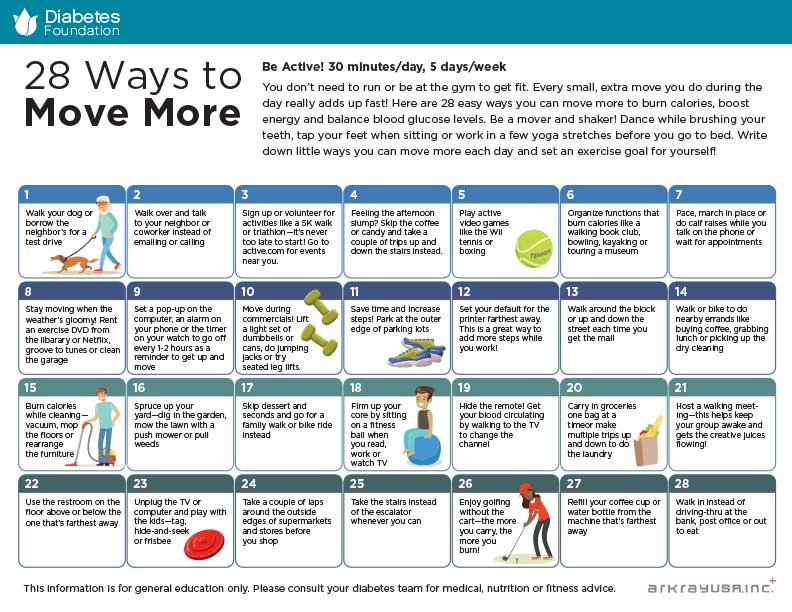
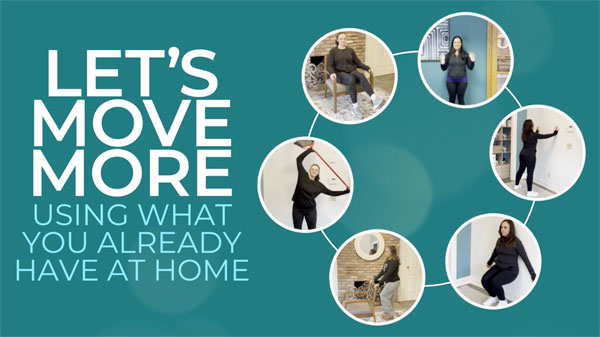
Choose activities that fit your abilities and start with small amounts of movement, gradually increasing your activity, taking movement breaks throughout the day, and setting realistic goals that you are able to attain on an ongoing basis.
Identify the different types of movement, and determine which activities are safe and appropriate for your health needs.
Aerobic activity such as walking, gardening, swimming and house cleaning is low impact and helps lower blood glucose levels, hunger, blood pressure, and stress while increasing glucose into your cells, elevating your energy, mood and heart health.
Aerobic Activity
Resistance training such as walk push-ups, resistance bands, stomach crunches, and squats lowers blood glucose levels while increasing muscle mass and glucose into cells. With heart disease, eye disease and kidney disease ask your doctor if this is recommended.
Resistance Training
Flexibility and stretching activities such as lunges and yoga stretches can lessen muscle pain while strengthening muscles and increasing blood flow. For safety always warm up muscles and don’t bounce or move quickly.
Flexibility and Stretching
Balancing activities such as lunges and planks help with shaking movements and falls which increasing muscle strength. For safety avoid difficult or unsteady movement to prevent injury.
Balance

NEED HELP UNDERSTANDING ACTIVITY?
The Diabetes Foundation can help you understand activity and movement through access to our free, live, online workshops led by a Certified Diabetes Educator.
Our Education Calendar provides an up-to-date list of ongoing programs that may meet your interests and needs, or contact us for personalized guidance.
If you prefer to attend a local diabetes education program, contact our Pathways to Care Guides who can help you find and connect with additional resources.