
Type 2 Diabetes Care Center
Understanding Type 2 Diabetes
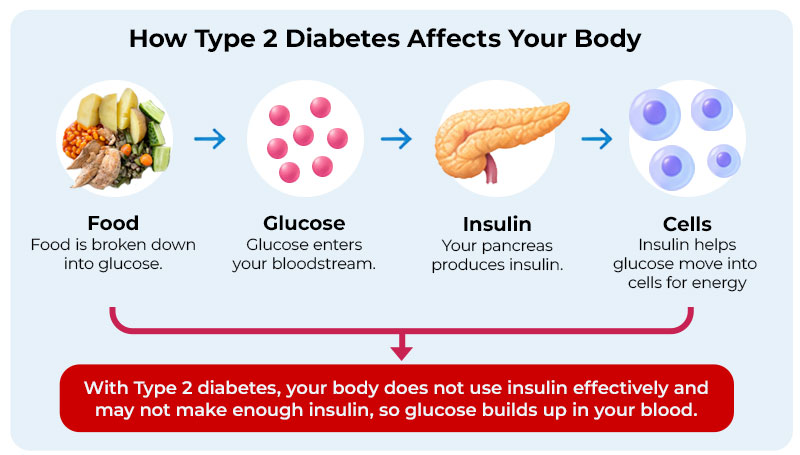
With T2D, cells become resistant to insulin. Insulin helps move glucose from the blood into cells for energy.
When cells respond less effectively, the pancreas produces extra insulin. The pancreas cannot keep up and over time, its insulin-producing cells cannot make enough insulin to meet the body’s needs, causing blood sugar to rise.
Persistently high blood sugar can damage the body. Over time, it can harm blood vessels and nerves, affecting the heart, kidneys, eyes, and feet.

Screening for Type 2 Diabetes
Screening options can include a fasting blood glucose test and an A1c which measures average glucose over last 2-3 months. An A1C screenings result will be ≥ 6.5%, and fasting blood glucose ≥ 126 mg/dL.

A1C Result
> 6.5%

Fasting Blood Glucose
>126 mg/dL
Approximately 9.2% of the adult population have diagnosed diabetes. With ongoing care and treatment, people with type 2 diabetes can manage their blood sugar and reduce their risk of complications.
Know Your Risk


Race
Symptoms of Type 2 Diabetes
Some people experience noticeable symptoms, while others may have few or very mild symptoms for a long period of time. Because type 2 diabetes can develop gradually, regular health screenings can be important—even when you feel well.
What you can do to Manage Type 2 Diabetes
Managing your sugar is key to support better heath. Understanding clinical best practices and incorporating what you can into your everday lifestyle can lead you to lower or manage your sugar.
Check out the pathway to managing prediabetes. Click on the icons to learn more about each step.
