Manage Your Stress
STEP 07 IN THE DIABETES MANAGEMENT PATHWAY
Learning healthy coping skills helps you manage the everyday challenges of life.
Healthy coping includes recognizing the signs of stress and taking steps to manage your emotions.
When you experience stress, your body releases hormones, such as cortisol and adrenaline, that can raise your blood sugar. Developing healthy coping skills helps you manage stress and keep your blood sugar levels more stable.
MANAGING STRESS BY TYPE OF DIABETES
Stress can affect everyone, but the challenges and strategies for managing it may differ depending on your type of diabetes.
Prediabetes
Managing stress can support healthy habits, improve sleep, and make it easier to maintain physical activity and balanced eating patterns that help reduce your risk of developing type 2 diabetes.
Type 2
Stress can raise blood sugar and make daily diabetes management more challenging. Practicing relaxation techniques, staying active, and seeking support can help you maintain healthy routines.
Type 1
Stress can affect glucose levels and add to the demands of daily diabetes care. Recognizing emotional challenges, monitoring glucose patterns, and connecting with supportive people can help reduce diabetes-related distress.
Gestational
Pregnancy and managing gestational diabetes can create additional emotional stress. Rest, gentle activity, relaxation, and support from your healthcare team can help you manage stress while caring for yourself and your baby.
WAYS TO MANAGE STRESS
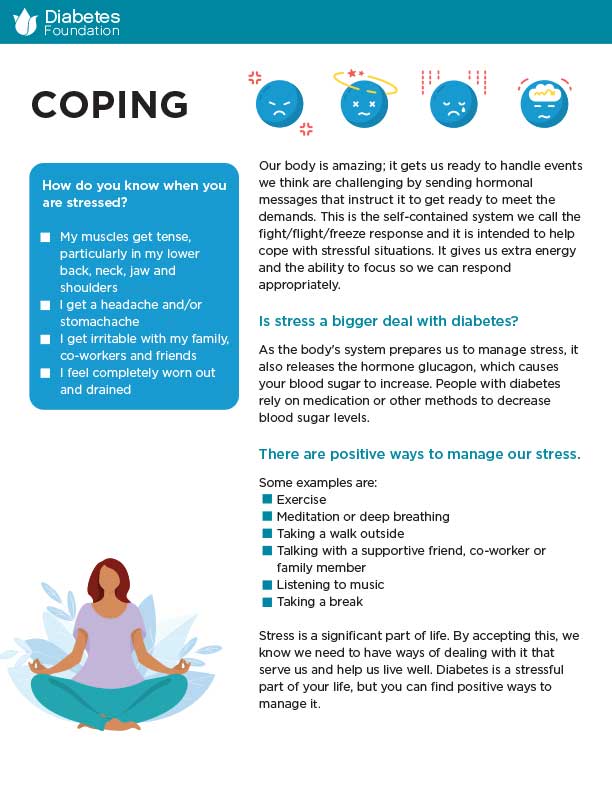
Learn to recognize when you are feeling stress, identify what is causing it, and determine different strategies to cope that work for you.
Types of coping skills include
- Practicing relaxation techniques
- Staying physically active
- Getting enough sleep
- Talking about your feelings
- Connecting with family, friends, or support groups
- Setting realistic goals
- Asking your healthcare team for help when needed
Deep breathing, meditation, and mindfulness exercises can help calm your mind, reduce tension, and improve your ability to respond to stressful situations.
Relaxation & Mindfulness
Walking, yoga, stretching, and other enjoyable activities can help relieve stress, improve your mood, and support healthy blood sugar management.
Find Movement
Spending time with family, friends, support groups, or a mental health professional can help you feel connected and better equipped to manage challenges.
Social Connections & Support
Getting enough sleep and establishing a consistent bedtime routine can improve your mood, support your energy levels, and help you manage everyday stress.
Rest & Healthy Sleep

Need Help?
The Diabetes Foundation offers free, live, education to help you understand ways to cope with stress as well as online social support groups and mentors.
Check our education calendar for a program that meets your needs or contact our Pathways to Care Guides to explore local support near where you live or work.
Contact us today to take the next step in your health journey!