Healthy Food Choices
STEP 05 IN THE DIABETES MANAGEMENT PATHWAY
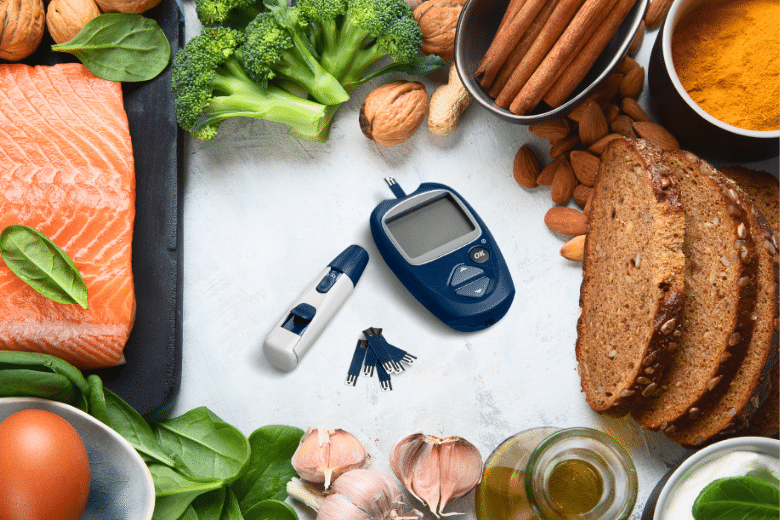
Understanding healthy eating helps you design your plate to maintain target blood sugar ranges.
Healthy eating allows you to make informed food and beverage choices that provide your body with the nutrients you need based on your culture, preferences, lifestyle and health needs.
Healthy eating helps manage how much glucose (sugar) enters your bloodstream and how quickly it rises after eating. It provides you with the ability to choose balanced meals with fiber, protein, and healthy fats to keep your blood sugar within a healthy range.
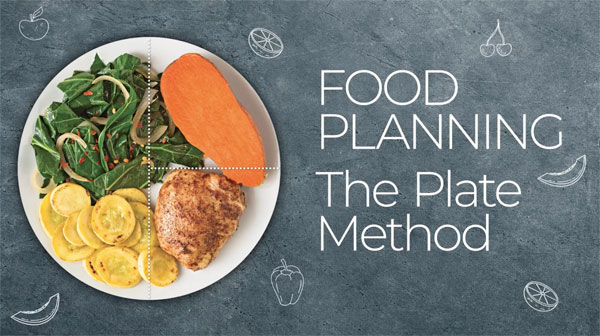
FOOD GUIDANCE BY TYPE OF DIABETES
While healthy eating is important for everyone, there are some specific considerations for each type of diabetes
Prediabetes
Focus on nutrient-rich foods, portion control, and balanced meals to help prevent or delay type 2 diabetes and support a healthy weight.
Type 2
Choose balanced meals with healthy carbohydrates, lean proteins, and healthy fats. Limit added sugars and refined carbohydrates to help manage blood sugar and support heart health.
Type 1
Learn how different foods affect your blood sugar and how to balance meals with insulin, activity, and your overall routine.
Gestational
Follow a balanced meal plan to help keep blood sugar in range, support your health and your baby’s development, and reduce the risk of complications.
How to Eat Healthier
There are different ways to eat healthier including
- Building a balanced plate
- Watching your portions
- Choosing healthier carbohydrates
- Drinking water more often
- Eating regularly
- Including more whole, nutrient-rich foods in your diet
Knowing how helps you develop realistic, sustainable eating habits.
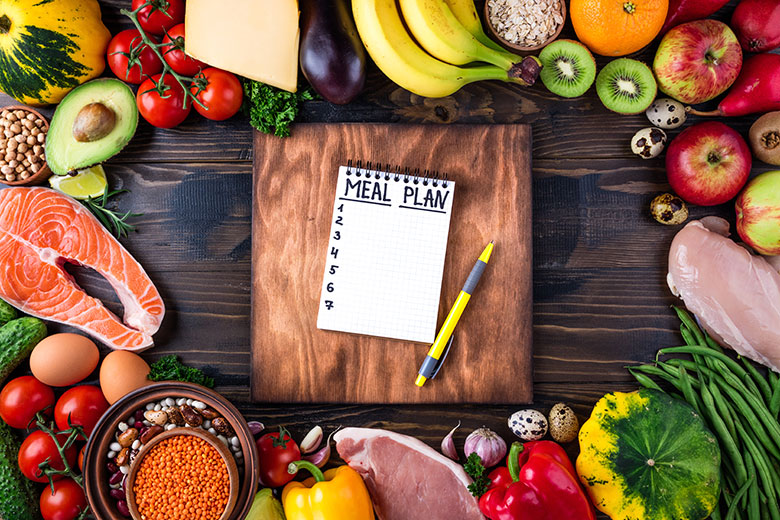
Start by understanding how to choose balanced, nutritious foods that support your health, followed by learning to plan your meals, identify ways to shop and eat out to maintain consistency.
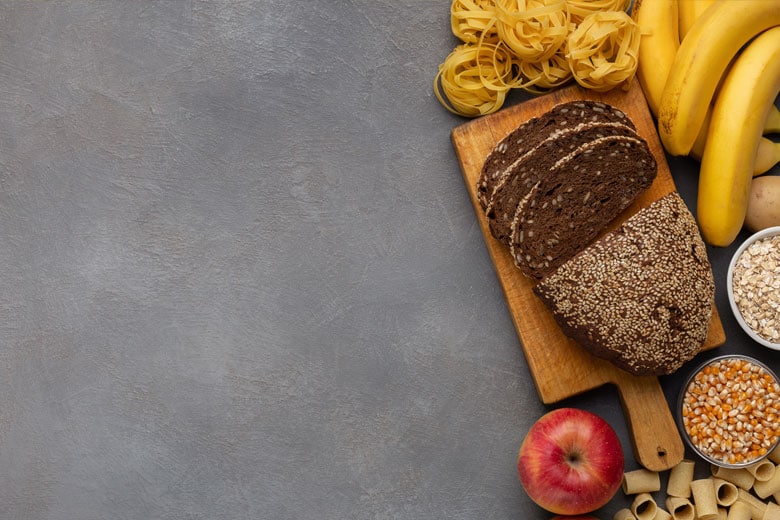
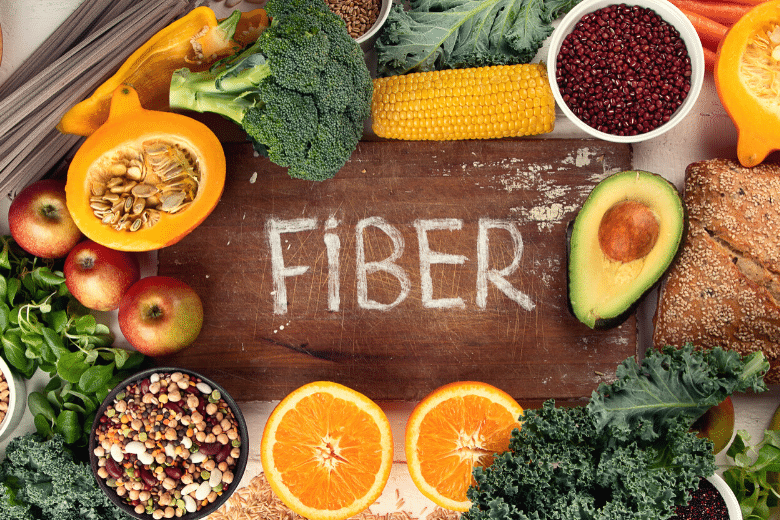
Whole grains like oats, brown rice, and quinoa provide fiber and nutrients that support digestion, heart health, and more gradual changes in blood sugar.
Whole Grains
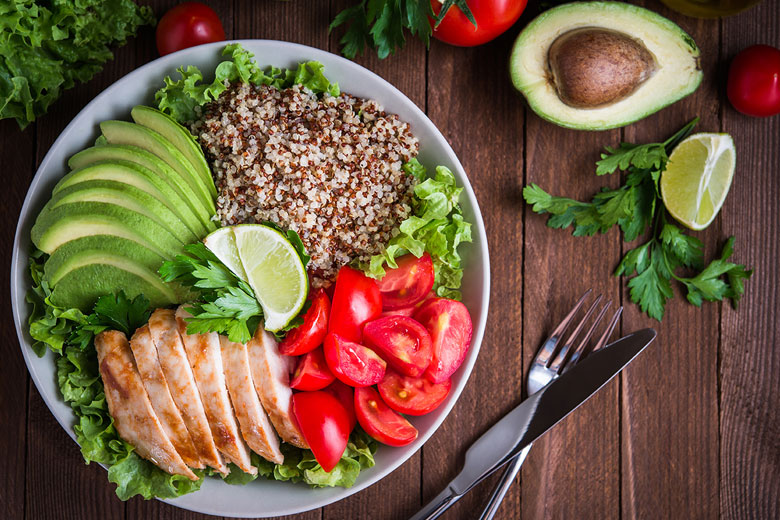
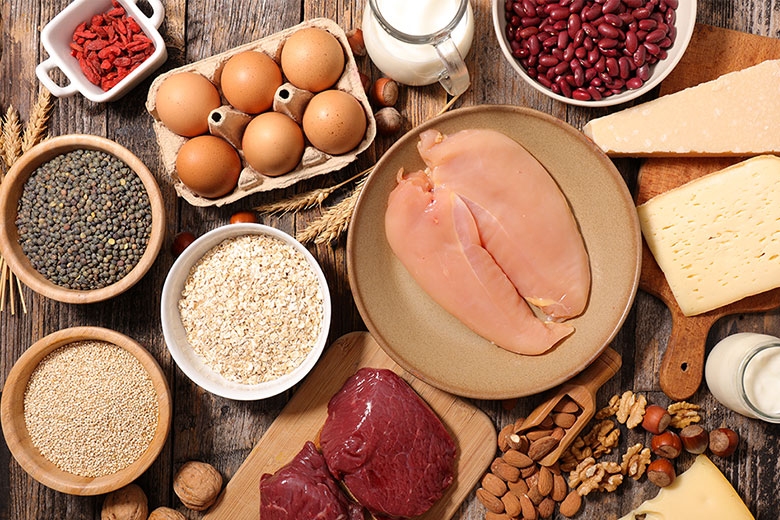
Foods like chicken, fish, eggs, beans, and tofu help build and repair your body, support muscle health, and keep you feeling satisfied after meals.
Lean Proteins
Vegetables like broccoli, leafy greens, peppers, and carrots provide vitamins, minerals, and fiber while generally having a smaller impact on blood sugar.
Non-Starchy Vegetables
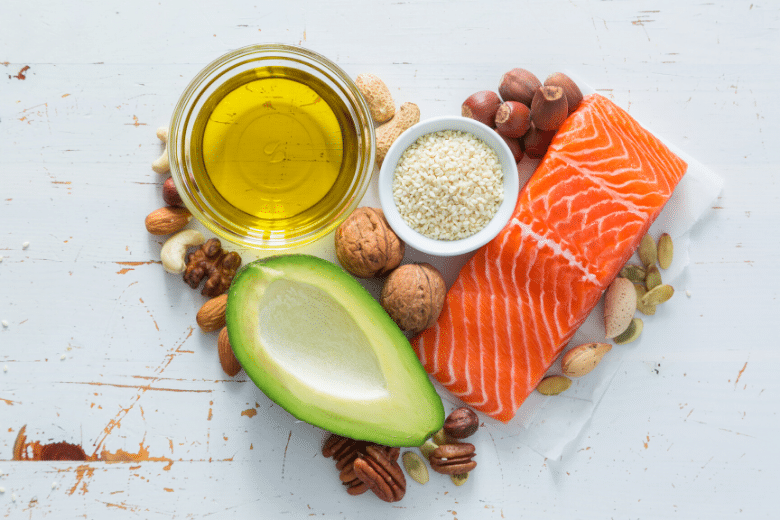
Foods like avocados, nuts, seeds, and olive oil provide healthy fats that support heart health and help you feel satisfied as part of a balanced diet.
Healthy Fats

Need Help? We’re Here to Support You!
The Diabetes Foundation offers free, live online workshops led by Registered Dietitians to help you understand healthy eating. Explore our Education Calendar to find a program that meets your interests and needs, or contact us for personalized guidance.
Looking for diabetes education closer to home or work? Our Pathways to Care Guides can help you find and connect with local education programs and resources.
DOWNLOADS
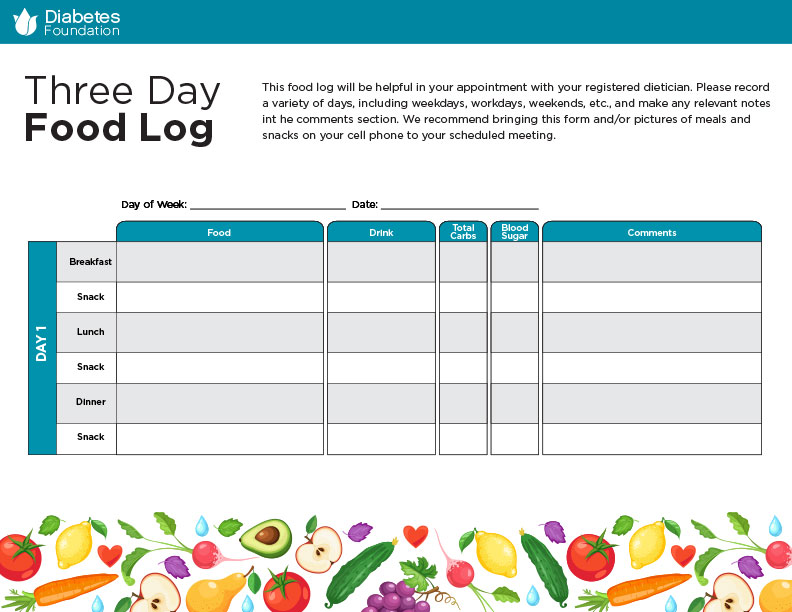
Three day food log
Download in English
Descargar en español
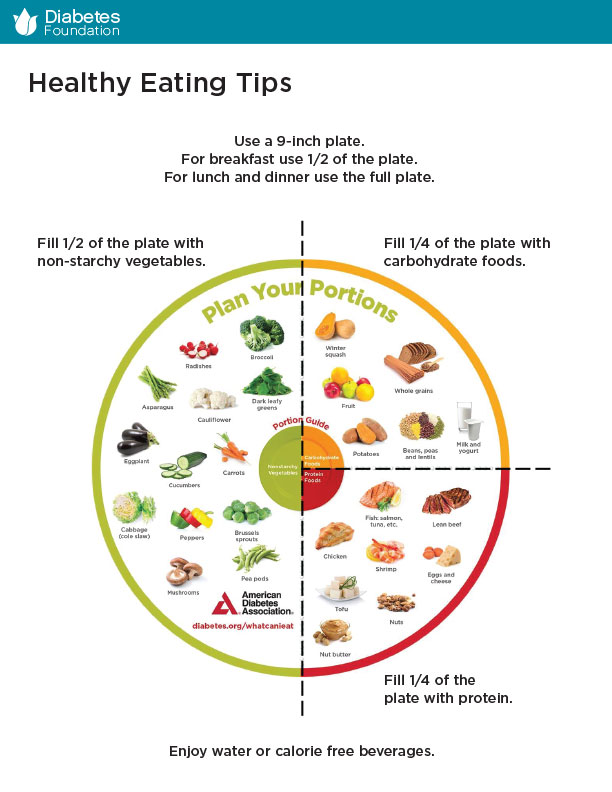
Health Eating Tips
Download in English
Descargar en español
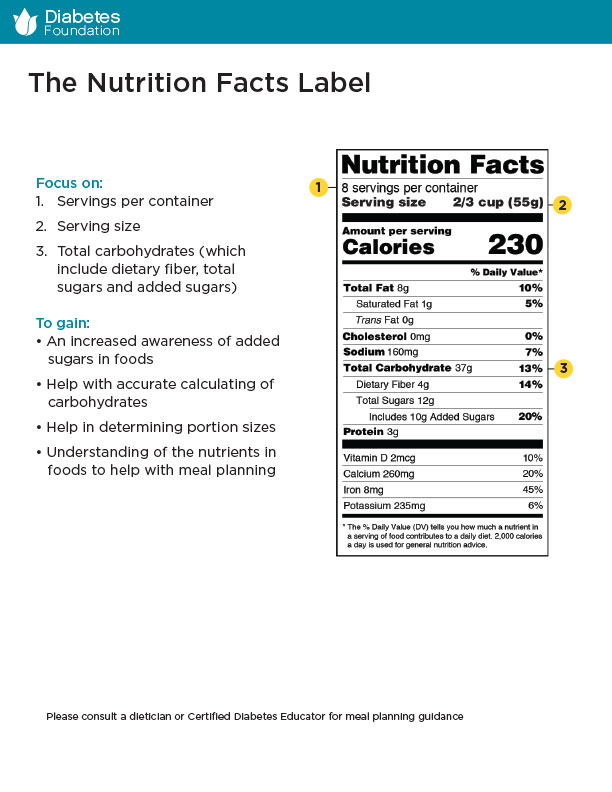
The Nutrition Facts Label
Download in English
Descargar en español

Healthy Eating Booklet
Download in English